Drive the Eastside BeltLine through Old Fourth Ward and you can watch a mid-rise apartment building go up in a matter of months. A concrete base goes in first, then floor after floor of wood framing stacked on top, wrapped around a parking deck. It is the dominant way Atlanta builds apartments now, and it is fast and affordable. It also has a fire problem that keeps showing up in the news, both during construction and after people move in.
These are commonly called podium or wrap buildings, and the fires that hit them tend to be big. Understanding why helps owners, HOAs, and property managers see where the risk actually sits.
What podium construction is
A concrete or masonry podium forms the ground level, holding parking, retail, or a lobby. On top of that non-combustible base, builders stack four or five stories of light wood framing, the same engineered lumber and dimensional studs used in a single-family house, just a great deal more of it. The industry nickname is five-over-one. It is economical, it goes up quickly, and along the BeltLine and the Ponce City Market corridor it is nearly everywhere you look.
Why the design spreads fire fast
Wood frame burns. In a finished building, drywall, firestopping, and sprinklers are meant to hold a fire long enough for people to get out and for crews to knock it down. The vulnerability is the sheer volume of concealed combustible framing, the shared attics, floor and wall voids, and roof assemblies that run the length of a large building. Once fire reaches those hidden spaces, it can travel behind the finishes faster than firefighters can chase it.
There is a second factor in how fast these go up. The engineered lumber and manufactured joists that make the framing affordable can lose strength quickly once they are burning, which is a real hazard for firefighters and a reason crews often fight these fires defensively from outside. That defensive posture, sound as it is for safety, tends to mean more of the building is lost before the fire is fully out.
The construction-phase danger window
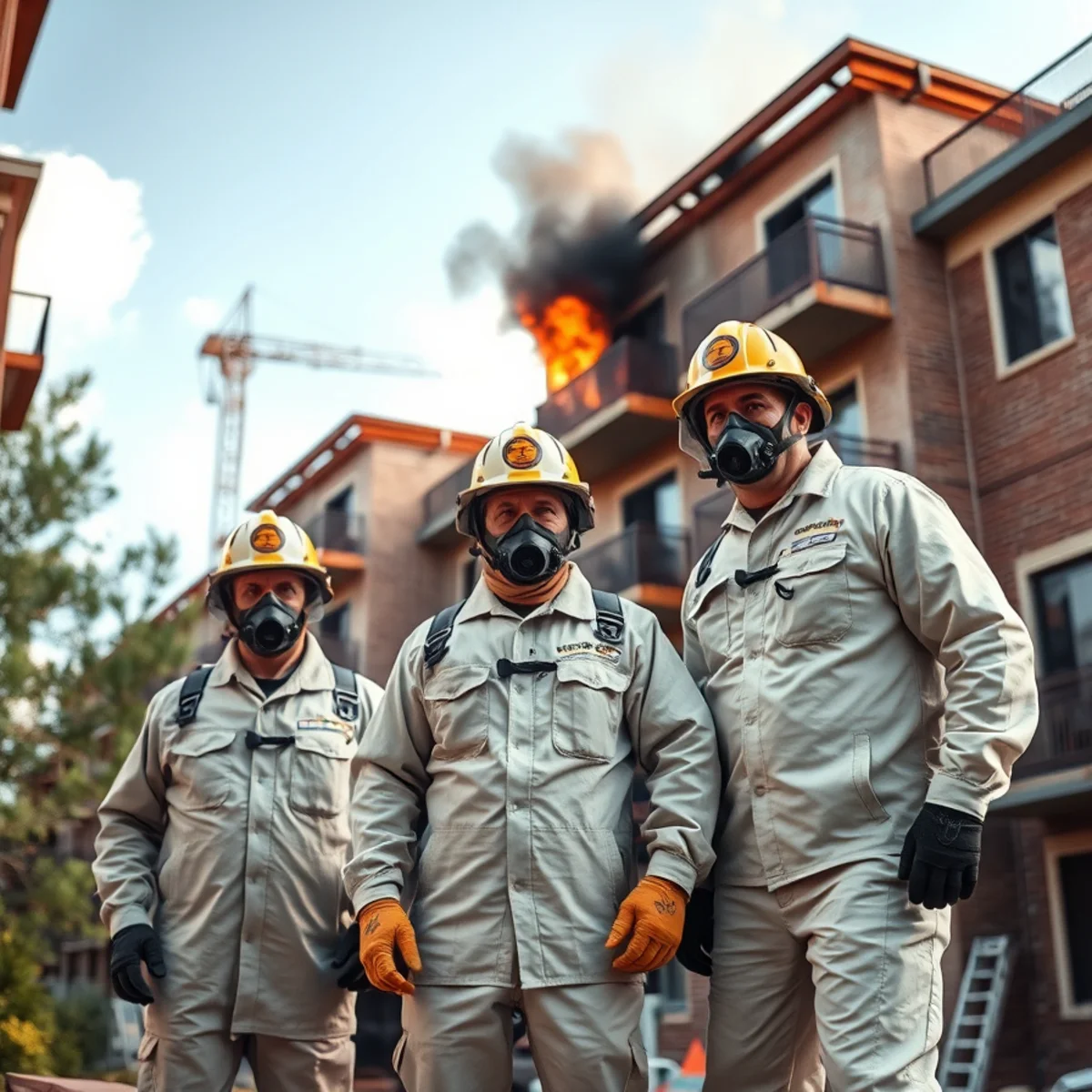
The worst of these fires happen before anyone lives there. During framing, a podium project is a stack of exposed, kiln-dried lumber with:
- No drywall yet to shield the wood.
- Sprinkler systems not yet charged or fully installed.
- Firestopping between units still incomplete.
- Open stairwells and shafts that act like chimneys.
- Fuel, equipment, and hot work such as welding and cutting on site.
After move-in, the roof and voids are the weak point
One ignition source during that window, whether hot work, a temporary heater, arson, or a discarded cigarette, can take an entire block-long frame, and metro Atlanta has watched more than one project burn down to the slab this way.
Once occupied and sprinklered, these buildings are far safer, but the roof and concealed spaces stay the soft spot. Sprinklers typically protect living areas, not always the attic and roof void or the podium's parking level. A fire that starts on a top-floor balcony or reaches the roof can run across the combustible roof deck above the sprinkler line. That is why so many of these events read as roof fires that displace an entire top floor and soak every unit below with water.
Why Old Fourth Ward sees so many of these
Old Fourth Ward has been one of the busiest development corridors in the city for more than a decade. The Eastside BeltLine trail, Ponce City Market, and Historic Fourth Ward Park turned a formerly industrial edge of downtown into prime ground for mid-rise apartments and mixed-use blocks, and podium construction is how nearly all of it gets built. That concentration means more of these buildings, at more stages of construction, standing closer together than in a spread-out suburb. It also means a single large fire can threaten neighboring buildings and the trail itself. For owners and managers along the BeltLine, the density is the draw and the risk in the same breath.
What owners and managers can do
You cannot rebuild the structure, but you can manage the residual risk:
- Confirm that attic, void, and balcony sprinkler coverage and firestopping are intact rather than assuming they are.
- Enforce balcony rules, since balcony grills, smoking, and stored combustibles are a common ignition point.
- Keep fire-rated unit separations and draft-stopping unmodified during any renovation.
- Have a multi-unit response plan ready before you ever need it.
- Keep clear, marked access around the full perimeter for fire apparatus, since these buildings are fought from the outside as much as the inside.
When a podium building burns
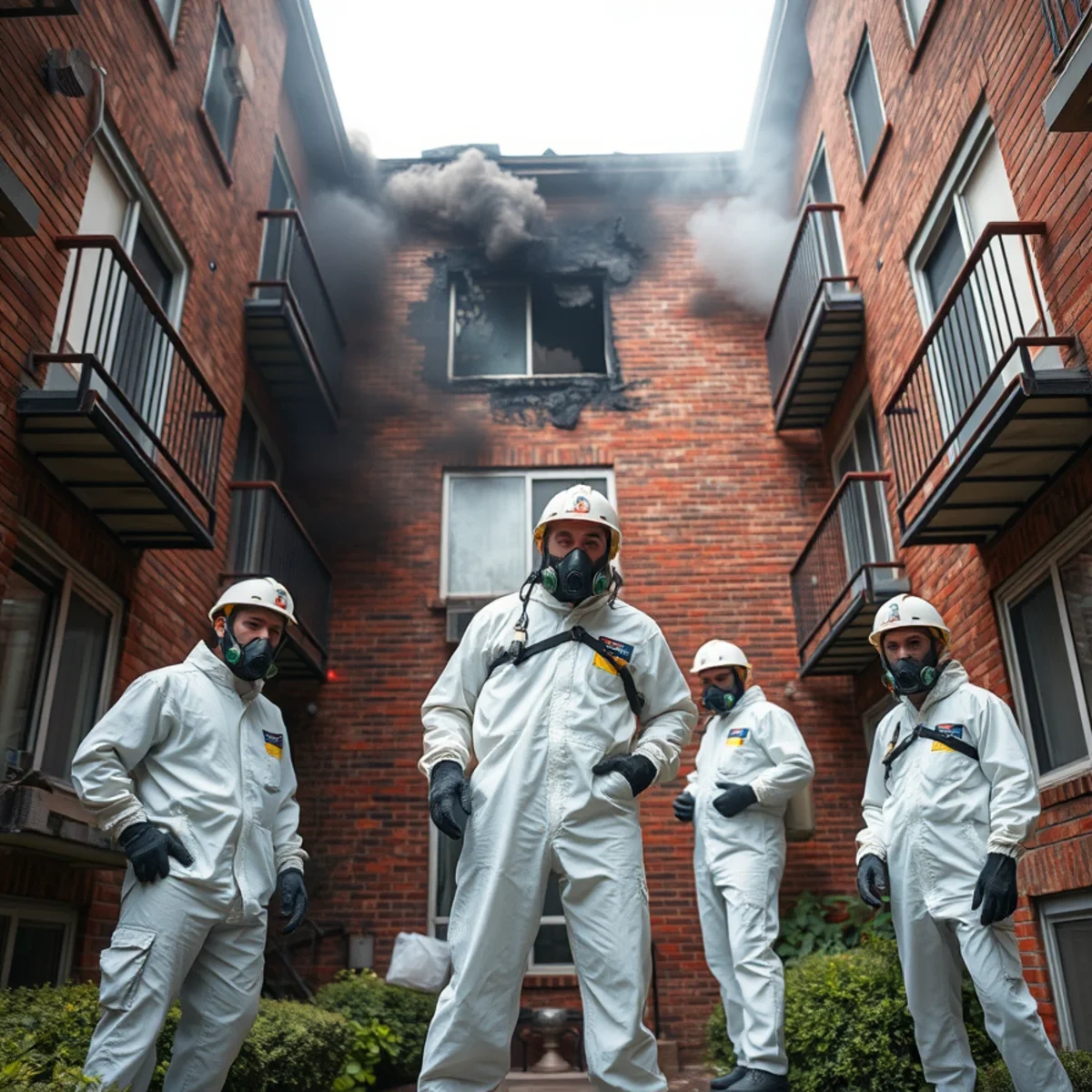
A fire in one of these buildings is never a one-unit event. Smoke rides shared attics and wall cavities into units far from the flames, and firefighting water runs down through the floors for hours. A top-floor fire can leave units three and four levels down soaked and smoke-stained, which is exactly why the scope is a building question and not a single-unit one. A property manager's response playbook and a clear plan for what residents should do afterward both start paying off in the first hour. Our apartment and condo fire restoration teams scope the whole building, not just the burned units, tracing smoke migration, water damage, and the odor that settles into drywall and HVAC across the property. We coordinate with owners, HOAs, and managers and bill insurance directly. Call (866) 688-0301 any hour.