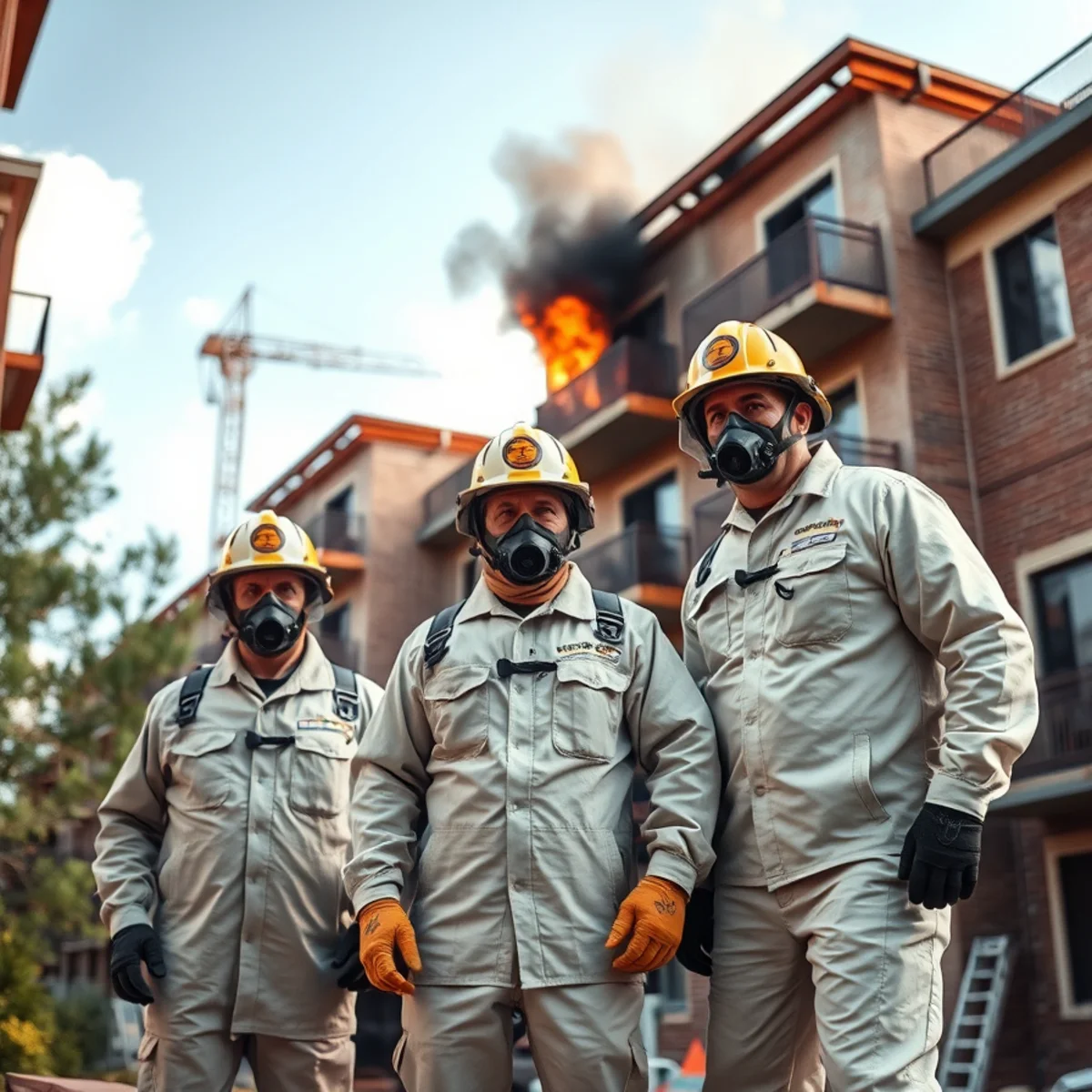
When a fire breaks out in one unit of a property you manage, the next few hours set the tone for everything that follows: displaced residents, an insurance claim, a building to secure, and a community watching how you handle it. A single-family fire affects one household. A multifamily fire pulls in tenants, owners, insurers, and often units the flames never touched.
The work splits into two tracks that run at the same time: taking care of people, and taking care of the building. This is a property manager's playbook for moving on both from the first hour, before the situation hardens into complaints and liability.
The first hour, once the scene is safe
After Atlanta Fire Rescue clears the scene, do not let anyone back into affected units until the structure is assessed for safety. The first hour is about accounting for people and stopping the damage from spreading. Every action you take now either limits the loss or documents it, and both matter later.
- Confirm every resident and staff member is accounted for. Life safety comes before the building.
- Keep residents out of burned units until they are declared safe to enter.
- Turn off the HVAC serving affected areas so it stops pulling smoke through the building.
- Begin a written and photo timeline of everything, starting now.
- Call your restoration partner and your insurer within that same first hour.
Communicate with residents fast and clearly
Residents caught in a multifamily fire are frightened and looking to you for direction. Silence breeds anger and, later, liability. A few clear messages early are worth more than a perfect statement a day late. Residents forgive a hard situation far more readily than they forgive being left in the dark.
- Give affected residents a single point of contact and a realistic status update.
- Point tenants to their renters insurance for personal property and relocation. The building's policy does not cover their belongings.
- Coordinate short-term relocation for displaced households, and document who went where.
- Keep unaffected residents informed about utilities, access, and timelines so rumors do not fill the gap.
Smoke does not respect unit lines
This is the part owners consistently underestimate. In older complexes along corridors like Chamblee's Buford Highway, where high-frequency older apartments sit beside newer shared-attic townhome construction, smoke and soot travel through shared attics, wall cavities, plumbing chases, and hallways into units far from the fire. A fire in unit 12 becomes a smoke claim in units 10, 14, and the one directly above.
Scope the whole building, not just the burned unit. Our apartment and condo fire restoration teams inspect adjacent and stacked units for smoke migration, because the residue and odor missed now turn into complaints and re-cleans later, on your dime and your reputation. This is the same fast-spread pattern behind Atlanta's podium-apartment roof fires, where one ignition point reaches a whole building through connected voids.
Secure the property and protect the claim
A fire-damaged building is exposed to weather, animals, and trespassers, and damage that happens after the fire because the building was left open can be excluded from a claim. Securing the property fast is both a safety step and a claim-protection step, and insurers expect you to take it promptly.
- Board up openings and tarp any roof breach the same day.
- Set up access control so only authorized crews and residents enter.
- Preserve fire-scene evidence if a cause investigation or subrogation is likely.
- Keep fire alarm and sprinkler coverage restored, or maintain a fire watch until the systems are back online.
Coordinate insurance and documentation
Multifamily claims involve the building's master policy, sometimes more than one carrier, and the tenants' own renters policies. Clean documentation moves all of it faster, and it settles the recurring question of who pays for what before it becomes a dispute. The cleaner your first-day documentation, the less any single resident's claim turns into a standoff between carriers.
- Photograph and video every affected unit and common area before any cleanup begins.
- Keep an itemized log of damage, displaced residents, and emergency costs.
- Let your restoration partner scope the loss and bill the insurer directly where possible.
Phase the restoration to re-occupy sooner
You rarely restore an entire building at once, and you should not try to. A phased plan returns unaffected and lightly affected units to residents first, then works toward the fire unit and reconstruction. That keeps the rent roll moving and residents housed while the heaviest work continues inside a contained zone, sealed off so dust and odor do not drift into occupied units. Share the phasing with residents too, so they can see steady progress and know roughly when their unit comes back. A visible plan cuts the calls to your office more than any single notice.
One call to start both tracks
The property managers who come through an apartment fire well are the ones who move early and keep both tracks running: people and building. We can take the building track off your plate. Our apartment and condo fire restoration crews respond 24/7 across metro Atlanta, scope every affected unit, secure the property, and coordinate the multi-unit claim so you can focus on your residents. We work around the clock because a fire does not wait for business hours, and neither can your response. When a unit burns in a property you manage, call us right away at (866) 688-0301.