A restaurant fire is a race against two clocks. The first is the damage clock: grease soot and protein smoke are corrosive and spread fast through a commercial kitchen and dining room. The second is the revenue clock: a closed restaurant loses money every service it misses, and staff start looking for other work within days.
Getting back open means satisfying not just the insurer but the health inspector, and that adds a step most other businesses never face. Here is how kitchen fire cleanup and reopening actually work for an Atlanta restaurant, from the grease soot on the hood to the re-inspection that lets you serve again.
Grease fires leave a specific, aggressive mess
A commercial kitchen fire usually starts as a grease fire on the line or in the hood, and it coats everything in oily soot and protein residue. Protein smoke is nearly invisible but leaves a varnish-like film and a strong, lingering odor that ordinary wiping smears rather than removes. Because soot is acidic, wiping it sets stains and drives residue deeper into surfaces.
It does not stay in the kitchen either. Grease soot and protein smoke reach the dining room, the upholstery, and the HVAC system, the same way a home kitchen fire spreads well past the stove. Clean only the visible mess and the odor comes roaring back the first busy, humid service. Protein smoke in particular hides until heat and moisture bring it out, which is exactly the wrong moment to discover it.
The hood, ducts, and appliances come first
The exhaust system is both the most common fire path and the first thing an inspector will scrutinize, so it leads the cleanup.
- Degrease the exhaust hood, the filters, and the full duct run end to end, since grease inside the duct is what carried the fire.
- Recharge or replace the kitchen fire suppression system, which most likely discharged during the fire.
- Clean and inspect ranges, fryers, ovens, and gas connections before they return to service.
- Remove the wet-chemical residue left by the suppression system from every surface it reached.
Clean the whole space, not just the kitchen
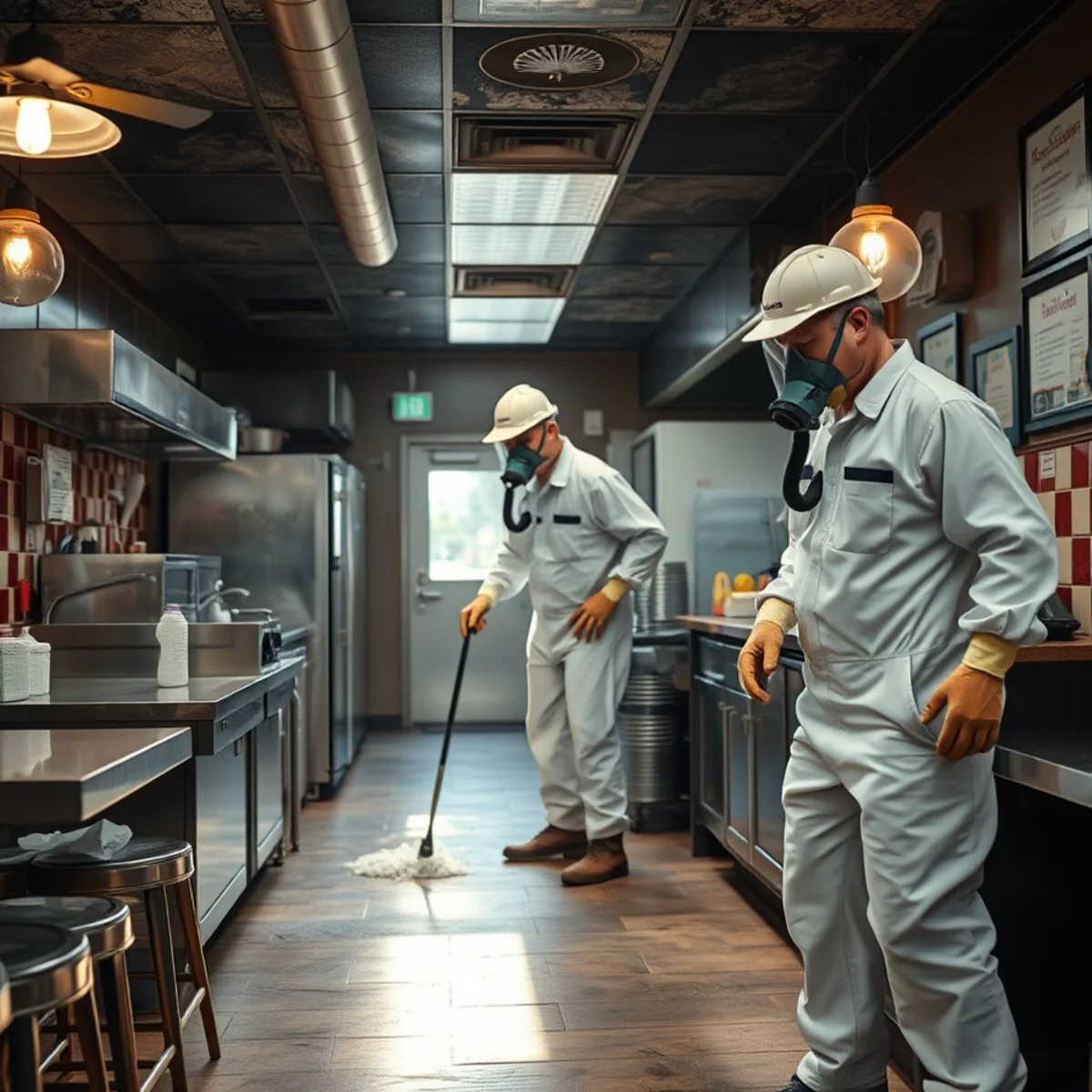
Grease soot and protein smoke migrate, so the dining room, restrooms, storage, and HVAC all need attention or the odor returns on the first hot day. Front of house matters as much as back of house here, because a guest smells smoke long before they see it. If the dining room still carries an odor, guests assume the food does too, fair or not.
- Neutralize soot on walls, ceilings, and fixtures with surface-specific methods, never dry wiping.
- Deodorize at the source with thermal fogging or hydroxyl treatment, not masking agents that fade.
- Clean or replace ceiling tiles, filters, and porous materials that trap odor.
- Discard and document any food and single-use items exposed to smoke or suppression chemicals.
Health-code re-inspection is the gate to reopening
This is the piece that separates a restaurant from any other commercial loss. Before you serve again, the county environmental health office, DeKalb or Fulton depending on where you sit, has to re-inspect and clear the kitchen. In areas like Doraville, where the Buford Highway restaurant corridor packs dozens of kitchens into aging strip retail, inspectors know grease-fire cleanup well and look closely at the hood, the surfaces, and the food-contact areas.
- All surfaces, equipment, and food-contact areas fully cleaned and sanitized.
- The exhaust and fire suppression systems restored and certified.
- No fire-damaged materials or contaminated food left on site.
- Utilities, refrigeration, and hot water back to code and working.
Coordinate the claim and the business interruption side
Commercial policies usually cover the cleanup and often business interruption for the income you lose while closed. Document from the start: photos before any cleanup, an inventory of damaged equipment and spoiled stock, and a dated log of the closure. Our commercial fire damage restoration teams scope the loss and bill the insurer directly where possible, so the paperwork does not become the reason you stay dark. Speed matters here for the same reason it does for any business fire, and every missed service is revenue you do not get back. Keeping the claim moving in parallel with the cleanup is how you avoid a gap where the work is done but the paperwork still has you closed.
Reopening is more than a clean kitchen
Passing re-inspection makes you legal to serve. Getting busy again takes a few more moves that are easy to forget in the rush to open the doors.
Bring staff back on a firm date so you do not lose your line cooks and servers to other kitchens. Restart your suppliers and deliveries in time for the first service. And let regulars know you are open again, because a closed restaurant fades from memory faster than most owners expect.
Reopen sooner with a crew that knows kitchens
Restaurant cleanup has to be fast without cutting the corners an inspector will catch, because a failed re-inspection costs you more days than doing it right the first time. Our commercial fire damage restoration teams respond 24/7 across metro Atlanta, degrease the hood and ducts, clean the grease soot and protein smoke the right way, and get the kitchen ready for the health-code re-inspection that reopens your doors. We coordinate the cleanup around your reopening date, not just around the damage, because in this business the calendar is the point. If a kitchen fire closes your Atlanta restaurant, call us right away at (866) 688-0301.