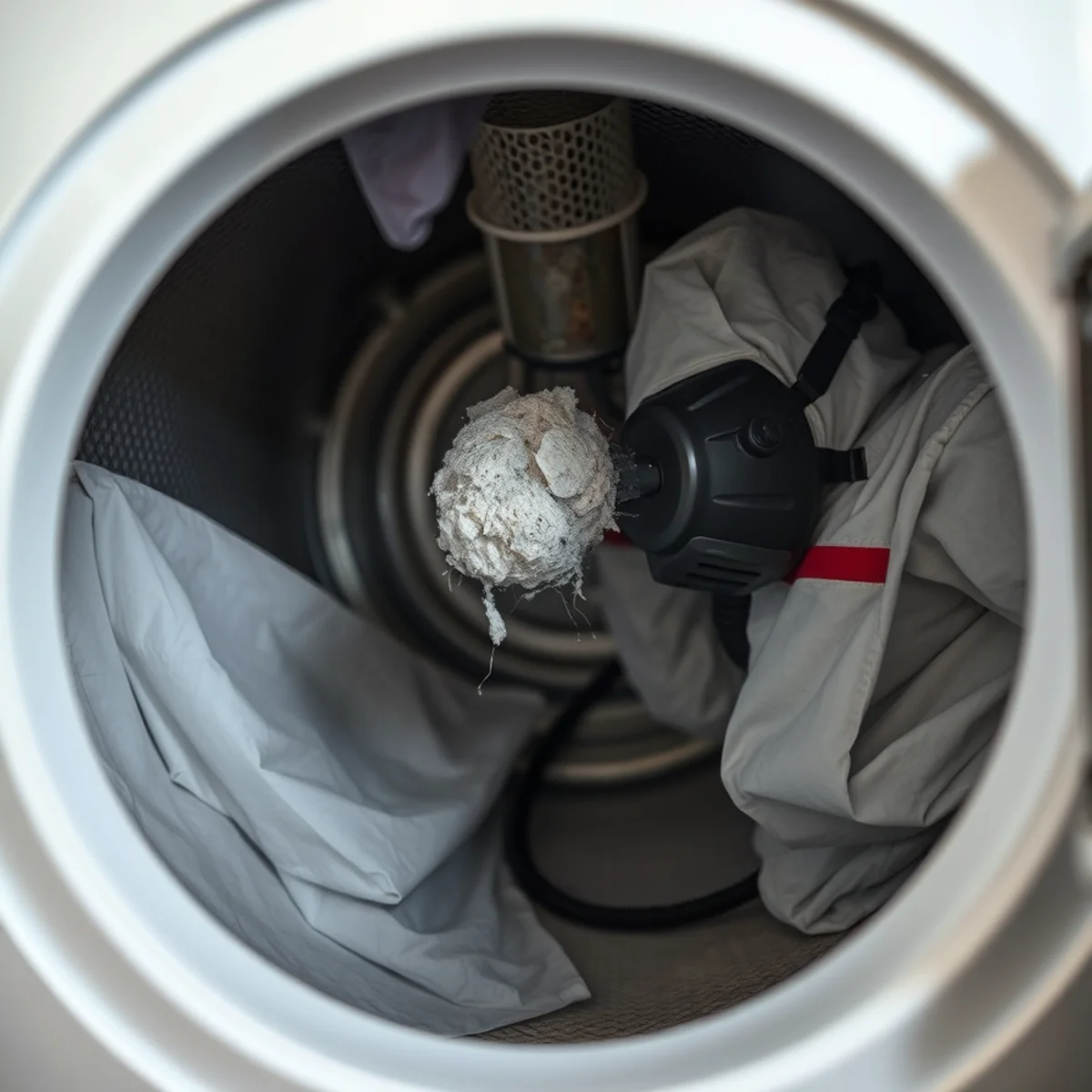
The lint screen is not the whole story. Every time your dryer runs, some lint slips past the screen and settles inside the vent duct that carries hot, moist air out of the house. Lint is one of the most flammable materials in your home, and a dryer pushes heat right through it, load after load, year after year.
That combination causes thousands of house fires across the country every year, and nearly all of them are preventable with a habit most people never build. Here is how the hazard grows, how to spot it early, and how often to clear it out.
Why lint in the vent is such a fire risk
A dryer fire needs three things, and a clogged vent supplies all of them: heat from the appliance, fuel in the form of packed lint, and restricted airflow that lets temperatures climb. As lint accumulates, the duct narrows, the dryer runs hotter and longer, and the heating element or a stray spark can ignite the buildup. It is a slow problem that becomes a sudden one.
The most dangerous stretch is the hidden run inside the wall, exactly where you never look and cannot reach with the vacuum. That is also why a dryer fire spreads so fast once it starts. It begins inside the structure and is already in the framing by the time you smell it. Heat that should be leaving the house stays trapped against the hidden lint, and the temperature climbs with every extra minute the load runs.
Gas dryers and stacked units raise the stakes
A gas dryer adds an open flame to the equation, so a blocked vent that traps heat and gases is a more serious hazard than with an electric unit. Stacked and closet-installed dryers, common in Atlanta condos, townhomes, and older apartments, often sit far from an exterior wall and vent through a long, twisting duct that clogs faster. If your laundry is tucked into an interior closet, treat the vent as a higher priority, not a lower one. A blocked vent on a gas dryer can also push carbon monoxide back into the room, which is one more reason to keep the duct clear and the airflow strong.
Warning signs your vent is clogged
A blocked vent almost always announces itself before it becomes a fire. Watch for these:
- Clothes take two cycles to dry, or come out damp and unusually hot.
- The top of the dryer or the laundry itself feels very hot to the touch.
- The laundry room turns humid or smells musty while the dryer runs.
- You notice a burning or scorched odor during a cycle.
- The exterior vent flap barely moves, or lint is visible around it.
- More than a year has passed since the last cleaning.
How often to clean it
As a rule, clean the vent at least once a year for an average household. Move to every six months if you have a large family, pets that shed, or a long or winding vent run. In areas like Panthersville, where 1970s and 1980s southeast DeKalb subdivisions often route the dryer through a long duct to reach an outside wall, that longer path traps more lint and deserves the shorter schedule. The same is true for any home where the laundry sits in the middle of the floor plan rather than against an exterior wall. If you cannot remember the last time the duct was cleaned, assume it is overdue and start there.
How to clean a dryer vent the right way
You can do this yourself in under an hour with a vent brush kit and a shop vacuum.
- Unplug the dryer, or shut off the gas, and pull it away from the wall.
- Disconnect the duct from the back of the dryer.
- Vacuum lint from the duct, the dryer's rear opening, and the wall port, using the brush to reach deeper into the run.
- Go outside and clear the exterior vent hood and flap by hand.
- Reconnect using metal foil tape, not screws, which stick into the airflow and snag lint inside the duct.
- Restore power or gas, and run a short cycle to confirm strong airflow at the outside vent.
Fix the vent setup, not just the lint
Sometimes the duct itself is the problem. A poor setup clogs again within months no matter how often you clean it, so it is worth correcting once.
- Replace flexible plastic or thin foil hose with rigid or semi-rigid metal duct. Plastic sags, traps lint, and can melt.
- Keep the run as short and straight as possible. Every elbow collects lint.
- Make sure the vent terminates outside, never into an attic, crawlspace, or wall cavity.
- Confirm the exterior flap opens freely and is screened against birds and rodents.
If a dryer fire does start
If you ever see flames or smoke from the dryer, get everyone out and call 911. A dryer fire spreads fast because it starts inside the wall, out of reach, and the smoke it produces coats far more of the house than the flames touch. Once the fire is out and Atlanta Fire Rescue clears the scene, our fire damage restoration crews handle the smoke, soot, and structural cleanup, and we document the loss for your insurer. Reach us any hour at (866) 688-0301. A twenty-minute vent cleaning is a lot easier, and far cheaper, than that call, so put it on the calendar today and set a reminder for the same week next year.