Ask a restoration technician how to remove soot and the honest answer is a question back: soot off what? A painted wall, a popcorn ceiling, and a raw brick chimney are three different problems, and the method that rescues one will ruin another. Professional soot removal is really a set of surface-specific techniques, chosen after reading what kind of soot is sitting on what kind of material.
Here is how the work actually goes, surface by surface, the way our crews approach it in homes across Atlanta.
How pros remove soot, surface by surface
Every surface takes a different method — that's why one technique never works everywhere:
- Painted drywall — dry chemical (soot) sponge first, no water, then a gentle degreaser if needed.
- Ceilings — worked top-down with HEPA vacuuming so falling soot doesn't re-contaminate walls.
- Brick and masonry — dry methods and poultices first; water too early drives soot deeper.
- Trim and woodwork — cleaned with the grain, then sealed if odor persists.
- Every surface is test-cleaned in a small spot first to confirm the method before going wide.
Before Any Surface, the Same Four Rules
Every soot job starts the same way, whatever the material. We identify the soot first. Dry, powdery residue from a fast-burning fire lifts off cleanly with dry methods. Oily, smeary soot from a smoldering or grease fire needs solvents and would just spread if touched dry. We work dry before wet, because water can turn a liftable film into a permanent stain. We work top to bottom, so falling soot lands on surfaces not yet cleaned. And we contain the room in plastic sheeting with the HVAC shut off, so disturbed soot does not drift into clean areas or the ductwork. Technicians also work in respirators and gloves, because disturbing settled soot puts fine, acidic particles back into the air you are standing in.
Painted Walls and Drywall
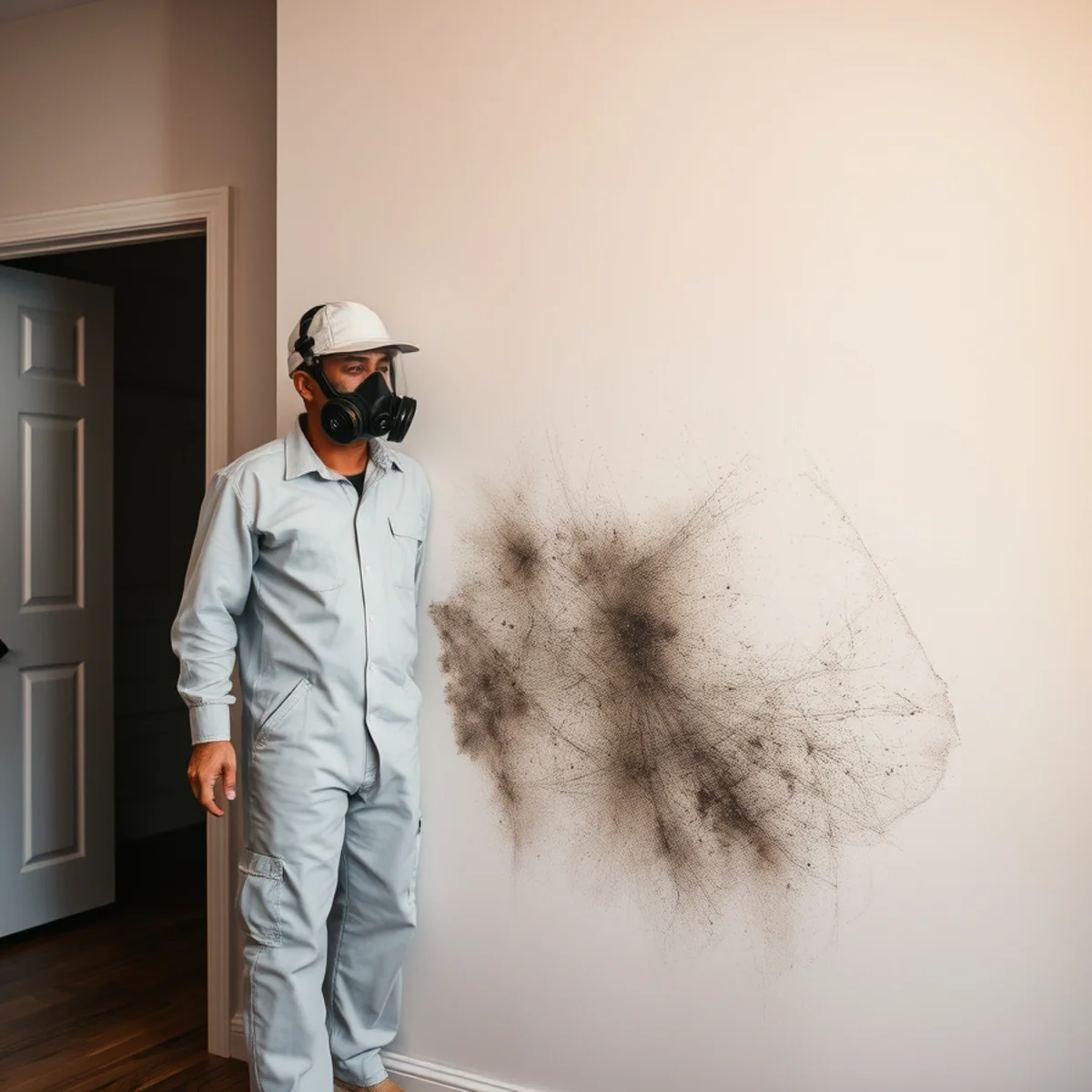
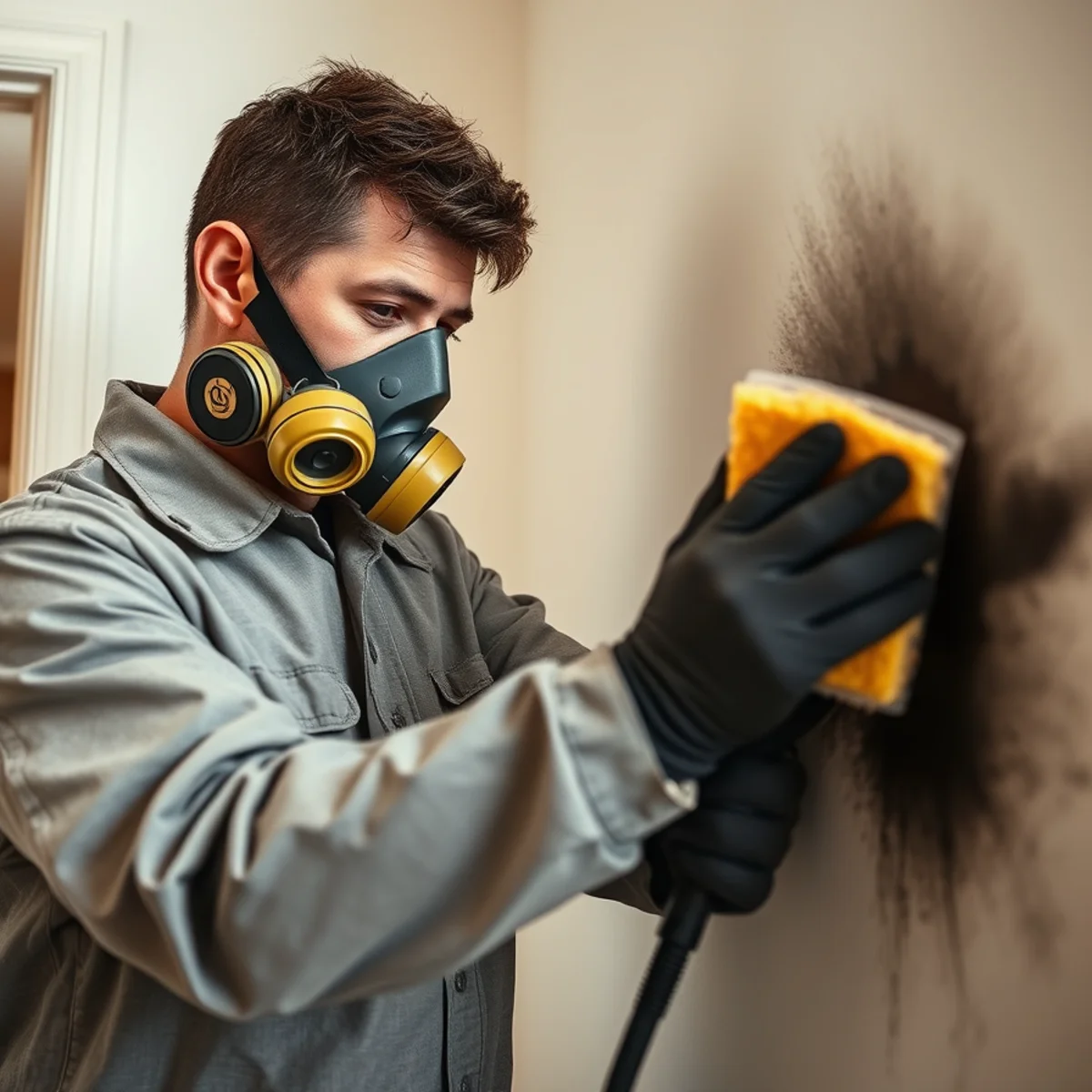
Painted drywall is the most common surface and one of the most forgiving, if you respect the order of operations. The first pass is a HEPA vacuum held just off the wall to remove loose soot without pressing it in. The second pass is a dry chemical sponge, a block of soft vulcanized rubber that grabs soot and holds it. Technicians wipe in single overlapping strokes and rotate to a clean face often, because a loaded sponge starts smearing. For dry soot, that is frequently enough. When an oily film remains, we move to a mild alkaline degreaser applied to the sponge or cloth, not sprayed onto the wall, and we test a hidden corner first for colorfastness. Drywall is never saturated. It is damp-wiped and immediately dried, because soaked gypsum board swells and fails. Wallpapered walls are treated more cautiously still, since any moisture lifts seams and reactivates the adhesive underneath.
Ceilings, Flat and Textured
Ceilings are harder because gravity worked against them during the fire and works against the cleaner now. Flat painted ceilings are handled like walls, with lighter pressure, since ceiling paint is often thinner. Textured and popcorn ceilings are the real challenge. They cannot be scrubbed or sponged without crumbling, so soot settles into every ridge. Light texture can sometimes be dry-vacuumed and treated with a soft dry sponge. Heavy popcorn, especially if it is loaded with oily soot, usually cannot be cleaned to a good result and is scraped and refinished instead, or sealed with a stain-blocking product before repainting. Trying to wet-clean a popcorn ceiling almost always ends with it on the floor.
Brick, Stone, and Masonry
Porous masonry is where soot removal gets specialized, because brick, stone, and mortar drink soot deep into their pores. Surface vacuuming comes first, then a poultice or a masonry-safe alkaline cleaner that pulls soot out rather than pushing it in. For heavy staining on structural brick or stone, controlled abrasive methods like soda blasting or dry-ice blasting lift soot without the water that would drive it deeper and feed mold.
This matters in a place like Lithonia, the old granite-quarry town southeast of Atlanta, where the historic core holds masonry and stone homes plus aged, dense original lumber. A recent call there involved a fieldstone fireplace wall that looked ruined. Dry-ice blasting brought the stone back without a drop of water touching the mortar. Pressure washing would have flooded the wall and set the stain for good.
Raw Wood, Trim, and Framing
Unfinished wood, framing exposed after a fire, and stained trim each behave differently. Sealed or painted trim cleans much like a wall, dry sponge first. Bare wood is porous like masonry, so it may need light sanding or media blasting to reach soot that has soaked into the grain, since a sponge only touches the surface. On structural framing that will be enclosed again, we clean and then seal with a specialized stain-and-odor sealer so nothing off-gasses behind the new drywall.
Clean Surfaces Are Only Part of the Job
Removing visible soot does not automatically remove smoke odor, and it does not touch what settled inside the mechanical systems. Even a spotless wall can smell if the ductwork is coated, which is why HVAC and duct cleaning after a fire is a separate, necessary step. Odor trapped in porous materials often needs deodorization after the surfaces are clean. And every surface that stays stained after correct cleaning gets sealed, not painted over raw, so the stain cannot bleed back.
Soot removal rewards patience and the right method for each material, which is exactly why it frustrates anyone attempting it with one rag and a bottle of cleaner. Our Atlanta crews carry the vacuums, sponges, chemistry, and blasting equipment to match the surface in front of them, whether that is a painted hallway in town or a stone chimney in Lithonia. If soot is sitting on your walls, ceilings, or masonry, call (866) 688-0301 and we will assess each surface before anyone starts cleaning.