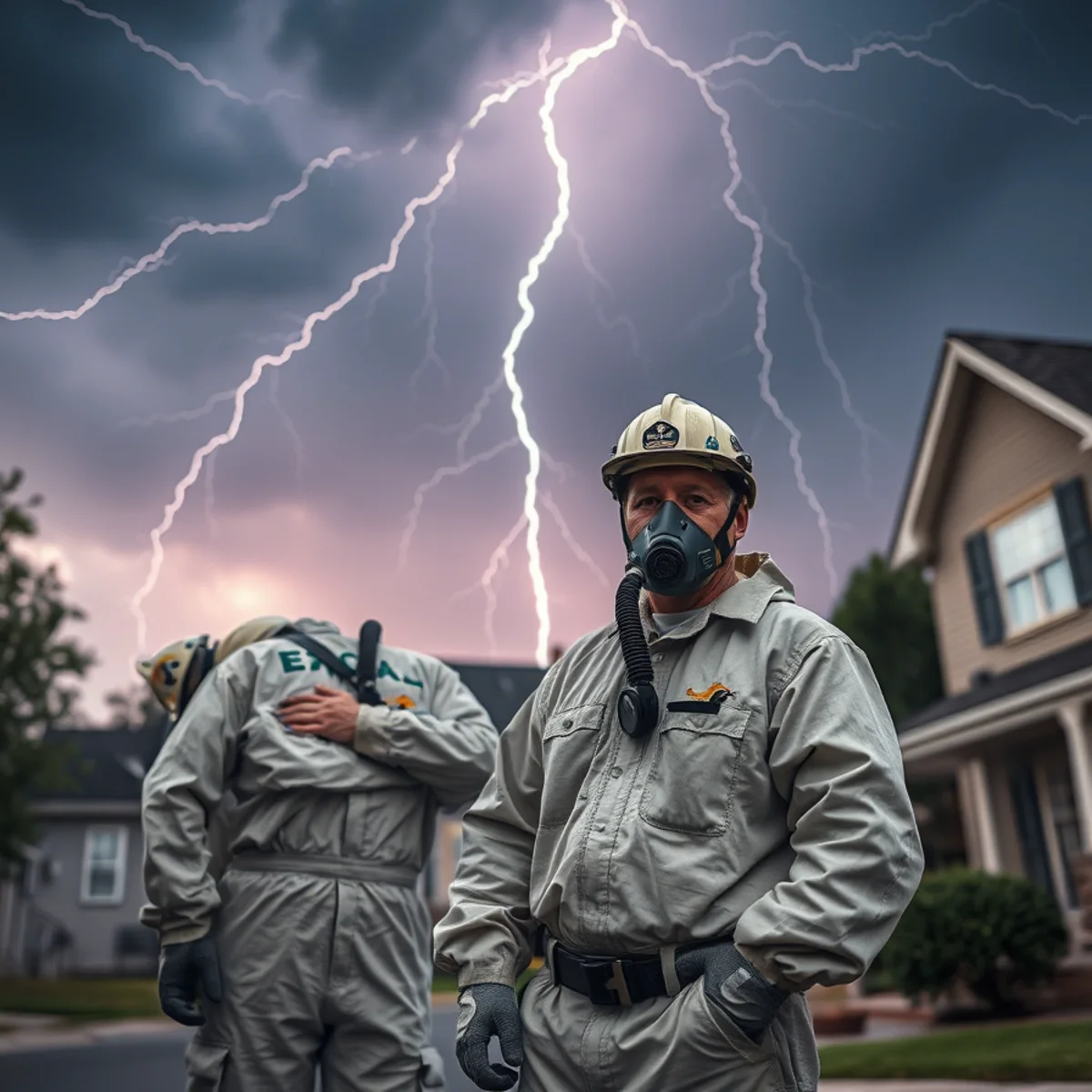
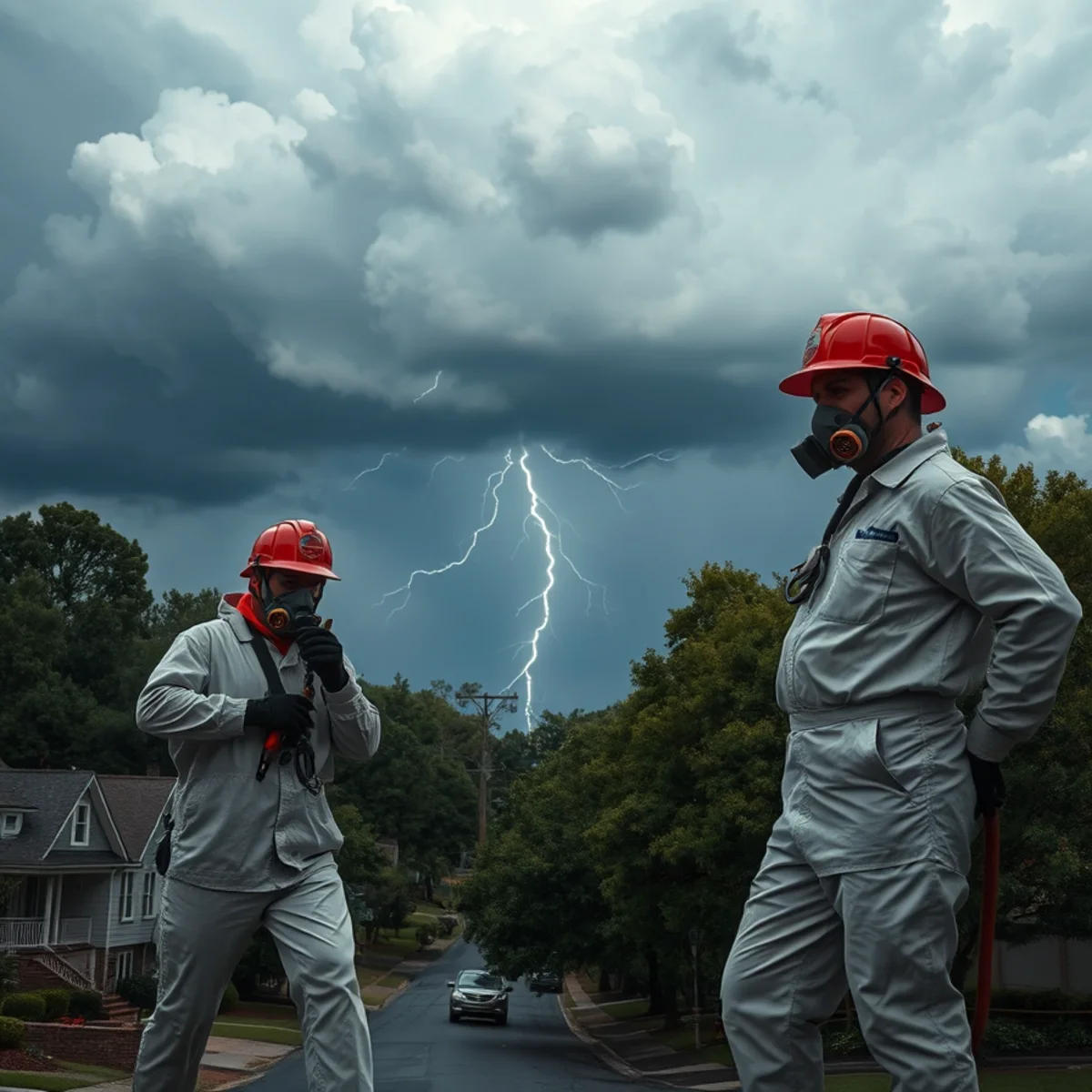
The trees are the whole point of living here. Atlanta calls itself the city in a forest, and neighborhoods from intown to north Fulton sit under a canopy of hardwoods and tall Georgia pines. Those same trees are lightning rods. Georgia gets some of the most frequent lightning in the country, and every summer a share of it finds a tree, a rooftop, or the wiring inside a house.
Lightning fires do not always announce themselves the way a kitchen fire does. A strike can start a fire in an attic or a wall and smolder for a while before anyone notices. Here is how the risk works in a heavily wooded metro, and what actually protects a home.
Georgia lightning is worse than most people assume
The Southeast is one of the most lightning-prone corners of the United States, and Georgia sits right in it. Metro Atlanta averages roughly fifty thunderstorm days a year, most of them packed into late spring and summer afternoons when the humidity builds and storms fire up over the city. More strikes over more days means more chances for one to hit a home, or a tree standing right next to one. Homeowners here tend to underestimate the risk because most strikes hit trees and open ground rather than houses, but the ones that do find a home can be costly and hard to spot.
How a strike starts a house fire
There are a few paths. A direct hit to the roof can ignite framing and attic material on contact. More often the bolt hits a tall tree in the yard and side-flashes, jumping from the tree to the nearest grounded path, which can be the house, its gutters, or its wiring. And a strike near the home can push a massive surge through the electrical and data lines, overheating wiring inside the walls and starting a fire far from where the lightning actually landed. That last kind is the sneaky one, because the damage is buried in the walls and can smolder for hours.
The tree-canopy paradox
Atlanta's canopy is one of the densest of any major American city, and it is a genuine asset, giving us shade, stormwater control, and property value. It also means most homes here have large trees close to the roof. A mature oak or pine that towers over the house is more likely to take a strike, and its nearness is exactly what lets a side flash reach the structure. You do not have to cut the trees down. You do have to account for them.
Milton and north Fulton's wooded lots
Few places show this better than Milton. Up in north Fulton off Birmingham Highway and around Crabapple, homes sit on large lots ringed by tall hardwoods and pines, often set well back from the road among mature trees. It is beautiful, and it is a lot of tall timber standing over expensive houses. When a summer storm rolls through, those lots take strikes. The distance from the road can also mean a longer response for fire crews, which is one more reason north Fulton owners lean on surge protection and lightning systems rather than luck. Insurers see enough lightning claims out of wooded north Fulton that surge protection is one of the cheaper investments a homeowner up here can make.
How to protect your home
You can shift the odds a long way in your favor:
- Install a whole-home surge protector at the electrical panel, plus point-of-use protectors on electronics and HVAC.
- Consider a UL-listed lightning protection system of rods and down conductors for homes under tall trees or on high ground, giving a strike a safe path to ground instead of through your walls.
- Keep large trees trimmed back from the roof and remove dead limbs that overhang the house.
- Unplug sensitive electronics when a strong storm is on the way if you have the time.
- Test smoke alarms, including any in the attic, since that is where a lightning fire often starts.
Trees, and what to watch after a storm
A tree that takes a direct strike does not always fall. Sometimes the only sign is a strip of bark blown off the trunk from top to bottom, and the tree slowly dies over the next year, becoming a falling hazard over the house or the power lines. After a close strike, walk the yard and look at the big trees near the house, and have an arborist check any that show a fresh scar. Inside, watch for outlets or switches that stopped working, a burning smell, or breakers that will not reset, all signs the surge found your wiring. If the strike was close and anything electrical is behaving strangely, have an electrician inspect before you assume the house came through clean.
After a strike
If lightning hits your home, treat it as a possible fire even when you see no flames. Check the attic, smell for smoke, and call 911 at any sign of fire. Because strike fires often start hidden in the roof or walls, they can flare up after the storm has passed, which is the same lesson behind any lightning-caused house fire and a close cousin of the winter fire spike that follows ice storms. Once Atlanta Fire Rescue clears the scene, our emergency fire damage response crews trace the smoke and heat damage through the attic and wall cavities, secure the roof, and document it for your insurer. We answer live, around the clock, at (866) 688-0301.