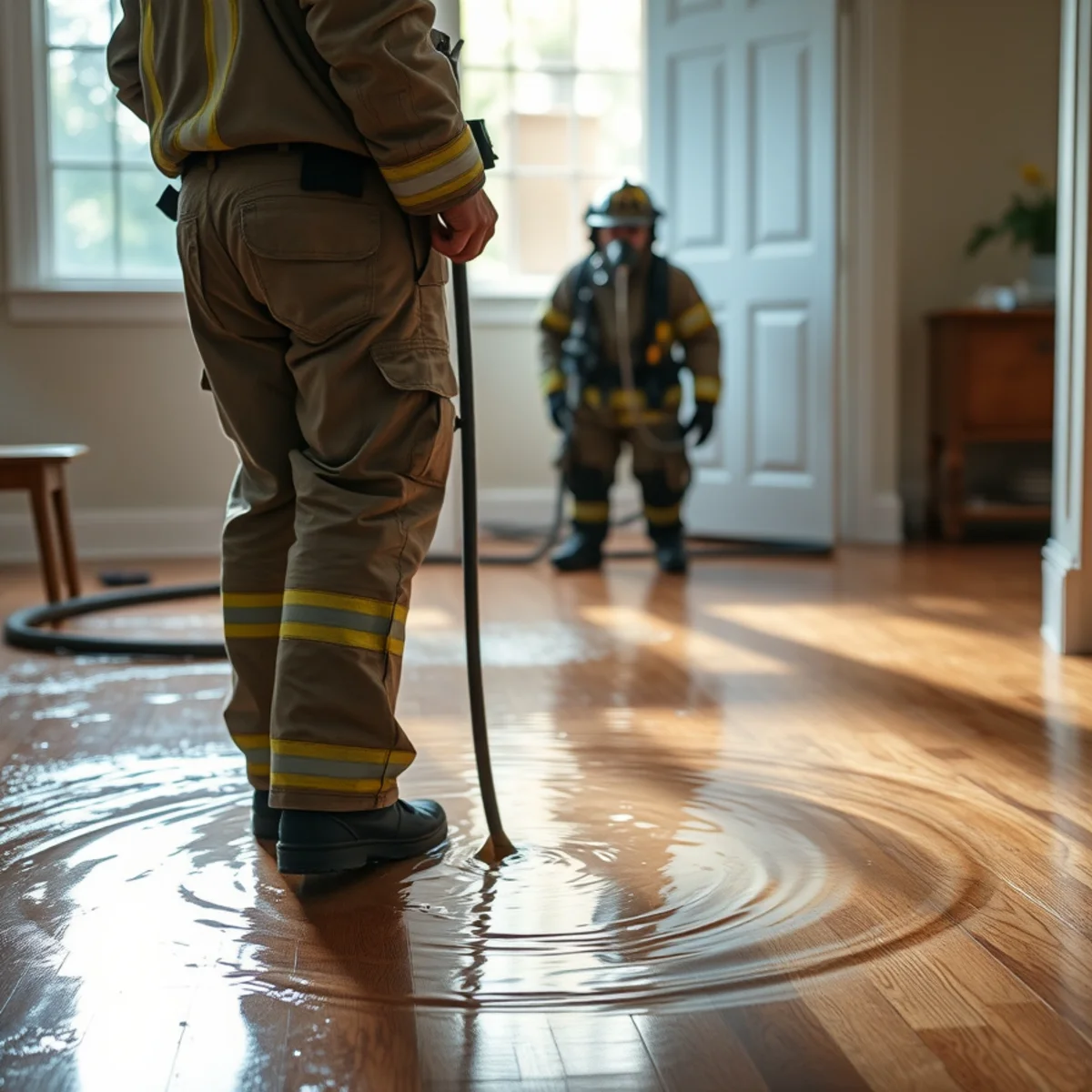
The puddle on the floor is the part of fire water damage you can mop. It is also the least of your worries. Putting out a house fire takes hundreds, sometimes thousands, of gallons of water, and most of it does not stay where you can see it. It runs downhill and inward, into wall cavities, under floors, and through the ceiling to the room below, then sits there quietly and turns to mold.
The visible water dries on its own. The hidden water is what causes a second disaster weeks after the fire is out.
Why Firefighting Leaves So Much Water Behind
Firefighters flow water fast to save the structure and the people in it, and that is the right call. A single attack line can move well over a hundred gallons a minute. Sprinklers, if the building has them, add more. That water hits hot surfaces, sheets across floors, and immediately looks for the lowest point it can reach. It pours through electrical and plumbing penetrations, down the inside of wall cavities, and along the tops of joists. By the time the fire is out, water has traveled well beyond the burned area, often into rooms that never saw flame or smoke. Multi-story homes fare worse, because water from an upstairs fire drains straight down through the floor assembly into the level below, soaking the ceiling, insulation, and light fixtures on its way.
Where the Water Actually Hides
After the surface water is gone, moisture is still soaking into places you cannot see:
- Inside wall cavities, wicking up drywall from the bottom plate and hiding behind baseboards.
- Under flooring and in the subfloor, especially beneath tile, vinyl, and laminate that trap it.
- In insulation, which holds water like a sponge and stops drying while it stays wet.
- In the ceiling below the fire, where water pools on the drywall before it stains or sags.
- In the crawlspace or basement, the lowest point everything drains toward.
- Behind and under cabinets, where trapped water rots the boxes and the wall behind them.
- Inside HVAC ducts and wall registers that carried water down through the system.
Why Hidden Water Turns to Mold So Fast
Mold does not need long. In the right conditions it begins to grow within 24 to 48 hours, and a fire-damaged home is close to ideal: wet organic materials like drywall paper, wood, and insulation, plus warmth. Atlanta's humidity makes it worse, because damp materials cannot dry into already-moist air on their own. Hidden water also does structural harm on its own timeline, swelling subfloors, delaminating hardwood, rusting fasteners, and rotting framing. Because none of this is visible, homeowners often think they dodged the water problem, right up until the smell and the stains appear.
How Professionals Find Water They Cannot See
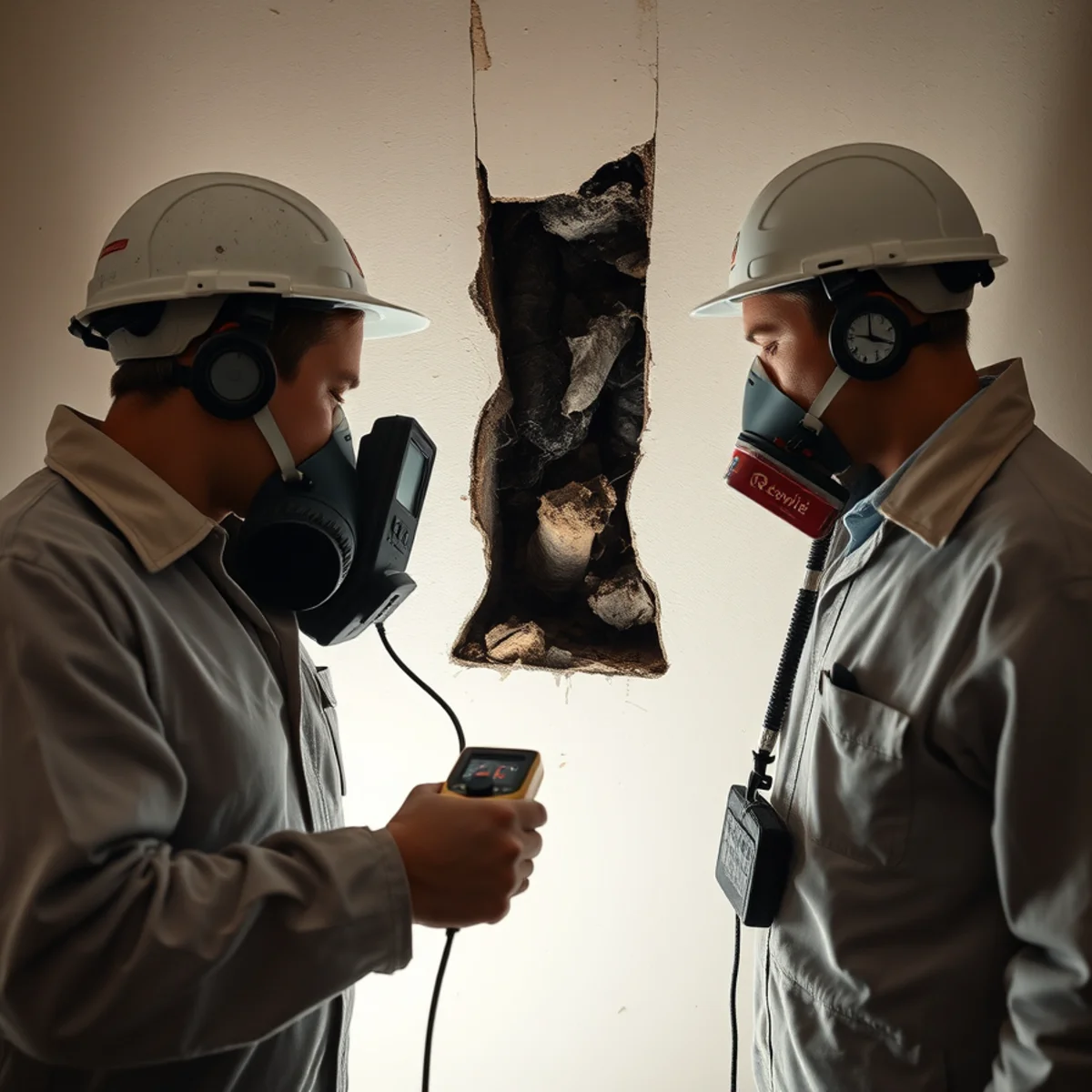
You cannot dry what you cannot find, so the first job is detection. Technicians use moisture meters to read the actual water content of walls, floors, and framing, comparing wet areas against dry baselines elsewhere in the home. Thermal imaging cameras reveal the cool signatures of evaporating moisture inside walls and ceilings, mapping how far the water spread without opening anything up. This is how a crew knows to check the closet two rooms away, or the ceiling one floor down, where water pooled after following a hidden path from the fire.
How the Water Gets Dried Out in Lithia Springs
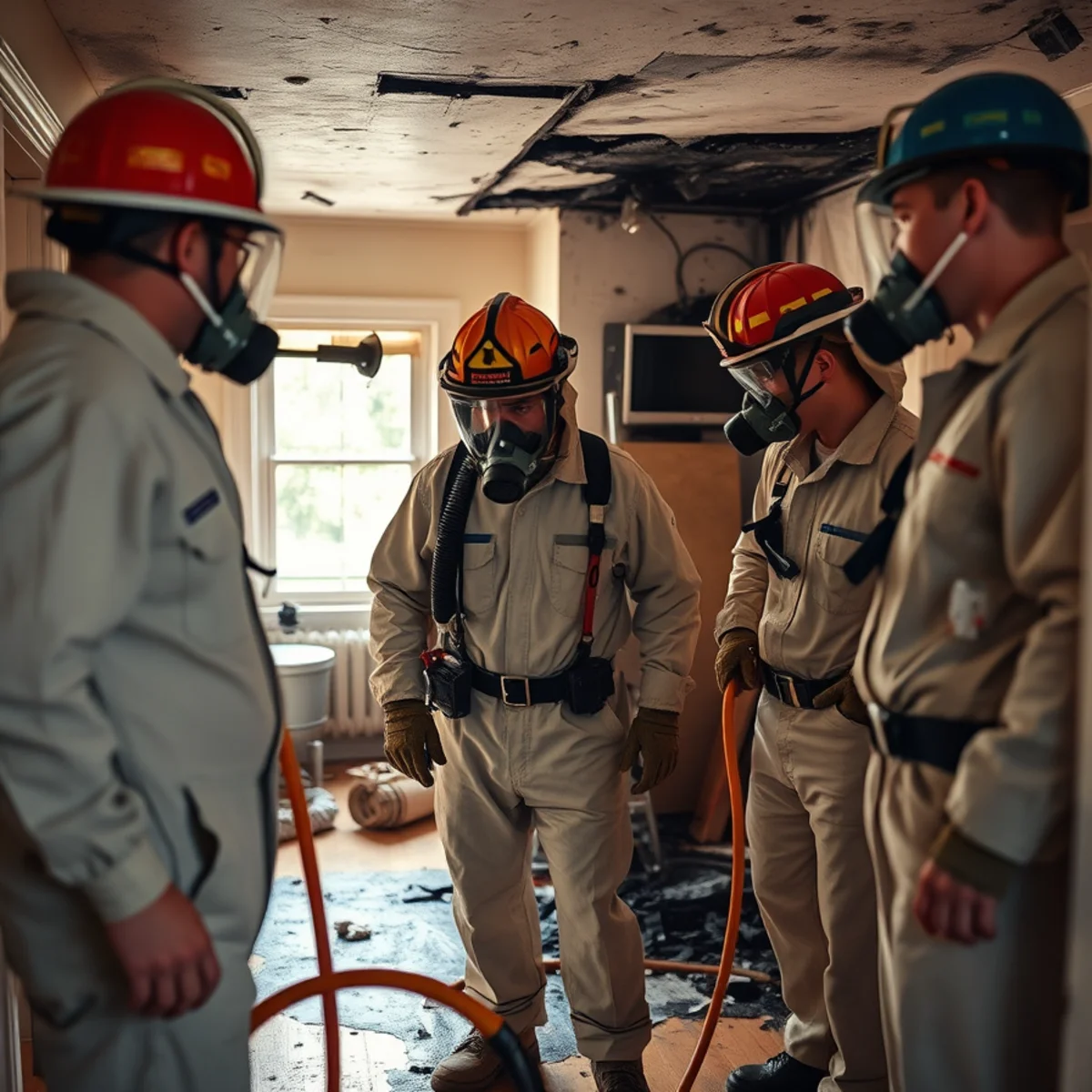
Fire suppression water extraction is the stage that gets ahead of all this. Crews extract standing and trapped water with high-volume equipment, then set air movers and commercial dehumidifiers to pull moisture out of the structure itself. Wet insulation usually comes out, since it will not dry in place. Drying is monitored with meters over several days until materials return to a documented dry standard, not just until they feel dry. The drying plan is calculated rather than guessed: the number of air movers and the dehumidifier capacity are matched to the affected square footage and the volume of water present, then adjusted as the daily readings improve.
This overlap of fire and water matters in Lithia Springs, out the I-20 West corridor near Sweetwater Creek, where homes already sit in flood-prone ground. A house there can face firefighting water from the inside and storm water from the outside at once, and both have to be found and dried before mold takes hold.
What Skipping This Stage Costs
Ignore hidden water and the bill comes due later, larger. What could have been a few days of drying becomes mold remediation, torn-out drywall, replaced subfloor, and sometimes reframing. Mold is also a health problem, especially for anyone with allergies or asthma, and a mold discovery can stall an insurance claim and a rebuild. Proper extraction and drying at the right moment is far cheaper than the demolition that follows neglected moisture.
After a fire, the water you can see is a distraction from the water you cannot. Our crews bring the meters, cameras, and drying equipment to track water wherever it went, throughout Lithia Springs and metro Atlanta. If the fire trucks have left and your floors were soaked, call (866) 688-0301 and we will find the water before it finds a way to grow.